Evidences of evolution of life
Studies and researches that are done in different fields from time to time show increasing complexities in organisms than their ancestors. These studies and evidences show many important evidences of organic evolution.
Studies and researches that are done in different fields from time to time show increasing complexities in organisms than their ancestors. These studies and evidences show many important evidences of organic evolution.
1. Trait-A exists in 10% of a population of an asexually reproducing species and trait-B in 60%of the same population….
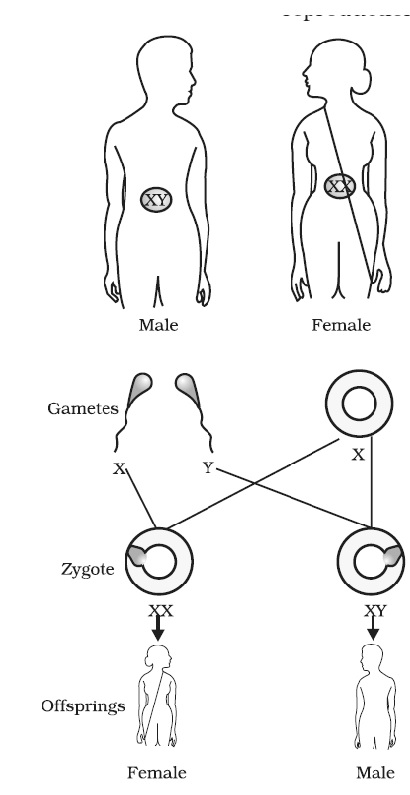
Determining male or female form of living organism through sexual reproduction is called as sex determination. Sex determination on a large scale is of two types- environmental, genetic and chromosome based.
Some specific characters are found in the parents of each species. These characters are transferred from generation to generation through the process of sexual reproduction.
Parental traits are transferred from one generation to other generation by means of chromosomes, DNA, or Genes.
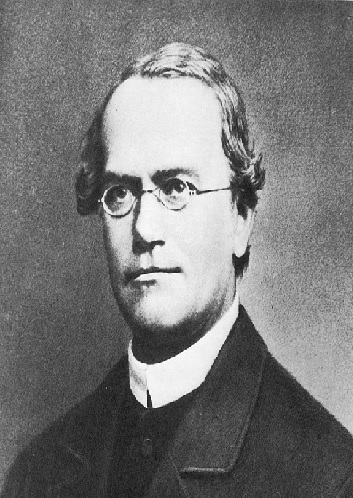
On the basis of his experiments of hybridization Mendel proposed following rules of heredity-1. Law of dominance, 2. Law of iseggregation and , 3.Law of Independent Assortment.
The physical and mental conditions that collectively affect the reproductive capacity of a male or a female are called as reproductive health. The reproductive health is most essential for reproduction.
Through different means – natural and unnatural the process of keeping in a limit the growth of population is called as Population Control. It is essential for the welfare of human families. This is the reason why its name has been changed to the Family Welfare.
When both the ovaries are fully mature, they alternatively produce ova at the interval of 28 days. Release of ovum into the uterus through the fallopian tube is called as ovulation.
All those processes that maintain the body of an organism collectively are called as life processes. These processes principally include Nutrition, Respiration, Internal Transport, and Excretion. Some other processes of life like control and coordination, Reproduction, Heredity and Evolution etc. are essentially found in living beings but they are not directly related to processes of life. Hence, these may or may not be regarded as life processes
In human beings reproduction takes place through the activities of male and female reproductive organs. To understand this, it is essential to study the structure of male and female reproductive systems separately.