Sustainable Development Goals and the Role of Education
Introduction In the era of the fourth industrial revolution where environmental degradation, economic inequality and social unrest are rampant, the…
Introduction In the era of the fourth industrial revolution where environmental degradation, economic inequality and social unrest are rampant, the…
Biofertilizers: Definition, Types, Benefits, and Uses in Sustainable Agriculture The fertilizers of biological origin that don’t contain any chemicals detrimental…
Integrated Pest Management (IPM) in India: Features, Benefits, and Sustainable Agriculture Practices The promotion of Integrated Pest Management (IPM) in…
Integrated Pest Management (IPM): Definition, History, Principles, and Implementation According to the Ministry of Agriculture, Department of Agriculture and Cooperation,…
Biotechnology in Agriculture: Applications, Techniques, and Benefits The scientific knowledge which is applied in practical ways in industry for the…
According to the Policy Document of Indian Agriculture Policy, Agriculture in India is a way of life, a tradition, which,…
The growing human population and backwardness of agriculture remained the principal reasons behind the scarcity of food in India up…
Modernization of Indian Agriculture and Its Environmental Impact With the advent of modernization in Indian agriculture, many changes were brought…
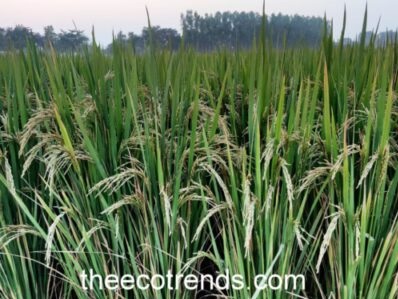
Growing a single crop species over a large area or farm is called intensive farming or monoculture. Earlier practices of mixed cropping caused problems in crop management, like harvesting, etc. Uniformity in plant height adds beauty to our fields and makes the application of agrochemicals easy. It also saves time and energy in segregating grains in threshing.
More than half of the population of the world comprises farmers. These farmers know that maintenance and conservation of natural resources are very important to sustain their livelihoods. However, the demand of more and more food due to exploding population and higher expectations for comfort and wealth forces these farmers to exploit more and more of the natural resources through the application of modern technology.
The application of scientific knowledge for practical purposes, especially in industry, is called as technology.
Medicinal weed Argemone Mexicana or Satyanasi is a prickly weed. It has been introduced and naturalized in India. It grows as waste land weed in almost every part of the country. It is reported as crop weed also in many parts of the country.