Convolvulaceae

Advertisement
December 24, 2020

Cuscuta- the Plant Parasite

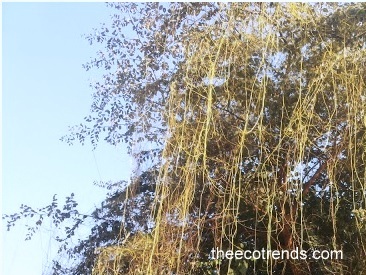
Cuscuta is found throughout the temperate and tropical regions of the world. It has great species diversity in subtropical and tropical regions of the world. It has many folk names like wizard net, devil’s hair, goldthread, hair weed, love wine; strangle weed, angel’s hair, and witch’s hair.

Read Article
September 25, 2022 Recommended

Water Pollution- Sources and Control

Mixing of different solid, liquid or gaseous substances and microorganisms into water, so as to alter its natural qualities is called as water pollution. According to the National Water Commission (1973), water gets polluted if it has not been of sufficiently high quality to be suitable for the highest uses people wish to make of it at present or in future.

Read Article
October 29, 2024 Recommended

Underlying Causes of Loss of Biodiversity

Varieties of Biological Resources are in international demand today. To meet this international demand, illegal smuggling of these resources is done through illegal routes. Some species of plants and animals have been threatened, rare, endangered or critically endangered due to such practices. Several valuable species of plants and animals have become extinct due to these activities. The international trade in animal body parts is increasing rather rapidly due to their high prices in the international markets. Where possible, the trade of whole animals is also in full swing.

Read Article
July 31, 2020 Recommended

Fern species that grow on old walls in

Ferns belong to Pteridophytes and grow on high altitudes in moist cold places. These don’t need any fertile soil. Since Ranchi or the most part of Jharkhand is located on high land its climate is rather different and somewhat similar to those area of mountains. The author reports here the two fern species that preferably grow in this region that too on old walls.

Read Article
May 7, 2022 Recommended

Biotic Components of Ecosystem

Living beings in environment like animals and plants constitute more than half of the environment in the biosphere. All of these need to be conserved.

Read Article
September 28, 2024 Recommended

Types of Ecosystems – Terrestrial and Aquatic

Ecosystems can be categorised into two broad categories: natural and artificial. Natural Ecosystems are those ecosystems that operate by themselves under natural conditions. These ecosystems are further categorized as Terrestrial and Aquatic Ecosystems. Terrestrial ecosystems relate to lands, whereas Aquatic ecosystems relate to fresh or marine water. Freshwater ecosystems may be Lotic or Lentic. Lotic are running water ecosystems like springs, streams or rivers, whereas Lentic Fresh Water Ecosystems may be found in standing waters of lakes, ponds, pools, puddles, ditches, swamps, etc. Marine Ecosystems are found in marine waters of salt lakes, seas, oceans and estuaries. Artificial Ecosystems are man-engineered ecosystems like crop fields, artificial ponds and lakes, aquaria, fish ponds, and abandoned mines reclaimed as lakes or water bodies for recreation.

Read Article
May 22, 2022 Recommended

Diversity of leaves and Leaf-fall

Though there are two basic types of leaves of monocotyledonous and dicotyledonous plants, we observe immense diversities in their arrangements, sizes, and shapes.

Some leaves are very short, as short as they cannot be seen through naked eyes where as there are big broad leaves that can form many umbrellas for small children.

Read Article
Advertisement
Gallery Picture
Gallery Picture
Gallery Picture
Gallery Picture
Gallery Picture
Gallery Picture
Gallery Picture
Gallery Picture
Gallery Picture
Gallery Picture
Gallery Picture
Gallery Picture
Gallery Picture
Gallery Picture
Gallery Picture
Gallery Picture
Gallery Picture
Gallery Picture
Gallery Picture
Gallery Picture
Gallery Picture