
Waste Management Technology in India Principles and Guidelines
Following principles and guidelines have been accepted for the control of different types of pollution- A. Prevention of entry into…
Following principles and guidelines have been accepted for the control of different types of pollution- A. Prevention of entry into…
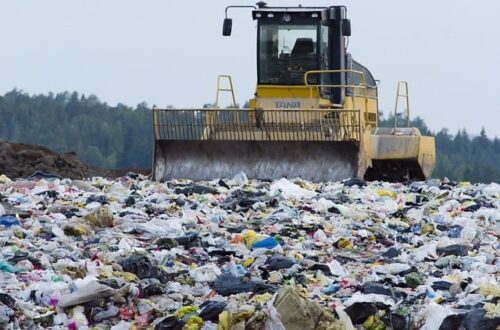
Land-filling is the process of disposing solid waste in low lands or into trenches through proper sanitary methods. It involves- collection, transport, compaction, etc. processes along with proper management for gas-outlet etc. For land filling, the important thing to be taken into account is the distance of waste collection site to the waste dumping site, because it involves cost of transportation.
Different activities may generate waste which may be solid or liquid. The quality of both solid and liquid wastes is increasing and if the wastes are disposed in an uncontrolled manner these may cause adverse impact on public health and environment. Hence these wastes need to be managed efficiently so as to safeguard public health and environment.
It is now a general opinion that if we see something moving, it is alive.
Fighting against the Climate Change which has become the biggest problem of environment is a big challenge of today.
Peperomia pellucida is commonly known as shining bush plant and Pepper elder. It commonly grows in the wild in moist shady places. In Jharkhand it is found growing during rainy season at the banks of streams or near old walls.
The Homoeopathic System of Medical Care is based on equality. Dr. Christian Friedrich Samuel Hahnemann created the pseudoscientific System of Alternative Medicine called Homoeopathy in 1796. He was born on 10th April 1755 in Meissen, Germany and died on 2nd July 1843 in Paris, France.
The Environmental Calamities that shook the humanity during fifties and sixties were powerful enough to generate serious and widespread sense of responsibility among world nations towards the global environment. Some of these calamities include : The killer smog in New York and London which claimed 5000 lives in 1952; The mercury poisoning due to the consumption of mercury-contaminated seafood in Japan;
According to their physical make up, there are basically two types of animals- Vertebrates and invertebrates. Invertebrates are those animals that don’t have a vertebral column or backbone. On the other hand, Vertebrates are those animals who have a vertebral column or the back bone.
There are more than 10,000 species of reptiles. This day helps us understand vast types of their species and their habitats. This day also provides us knowledge about benefits that we get from the world of reptiles.
A habitat is the natural home or environment of an animal, plant, or other organism.