
Define conservation. Why do we need conservation?
Conservation of the environment implies the sustainable use and management of natural resources, including wildlife, water, air, and soils.
Conservation of the environment implies the sustainable use and management of natural resources, including wildlife, water, air, and soils.
Recently, it has been found that Photo Voltaic Cells cannot be popularly used for power generation on large scales. However, our scientists have discovered that the alignment of Carbon Nano Tube with the polymer composites substrate would give very high efficiency in Photo Voltaic Conversion.
The Heavy Engineering Corporation (HEC), Ranchi, Jharkhand has decided to make turbine for generating electricity from the Wind Energy. For this HEC has decided to take technology from the Sky Wind, a company of Germany.
Human beings needed to live together to have a family and to rear and develop children. They lived together for social security and social strength. Thus, human settlements were formed.
Neighbourhood is a geographically localized community within an area, may it be a rural area, a town or a city, or sub-urban.
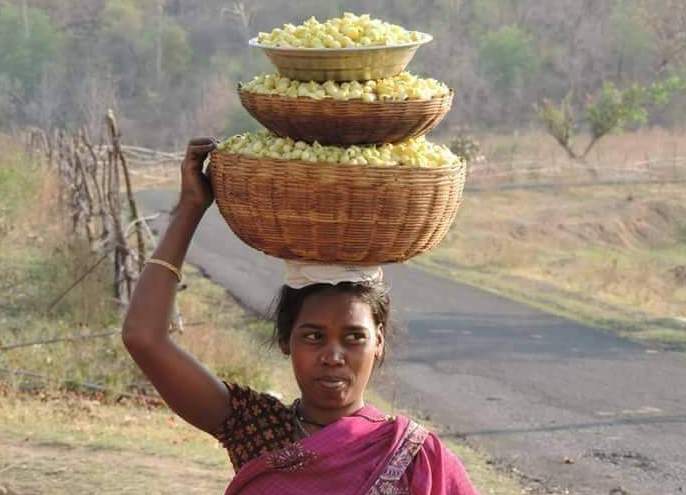
Mahaua or the Madhuca longifolia is indigenous to India. It is a good sized tree and it grows up to 20 meters in height.
Sometimes it so happens that serious and abrupt changes in weather condition ruin the entire crop. Thus, the hard work of the whole season goes in vain. What about the debt which he has to pay? On the other hand, market prices of his agriculture production often remain too less to support the economy of the farmer. These are the conditions under which a number of farmers in different states of India have been reported committed suicides.
The dictionary meaning of a shelter is – something beneath, behind, or within which a person, animal or anything is protected from adverse conditions, and where it can reproduce is called as a shelter.
Sankranti or Solstice means: moving from one place to the other or meeting with another. When sun enters from one rashi o the other rashi, it is called as Sankranti.
The tragedies in the environment stimulated the world nations the recognition of which first appeared in the shape of the United Nations Conference on Human Environment for the preservation and enhancement of its quality, at Stockholm from June 6 to June 16 in the year 1972. The delegates from 114 nations attended the conference and signed the Stockholm Declaration.
Living beings interact among themselves in the same species, with the members of the other species, and with the components of the abiotic environment in an ecosystem. Interaction between the members of the same species is called as Intraspecific whereas the interaction among individuals of different species is called as Interspecific.
Energy is the basic force capable of running life. But, the sources of energy are running short.
We have damaged ecosystems in the name of development. Wildlife too is facing danger. Our activities have impacted in such ways that animal population has fallen into a serious zone of danger.